
Chronicle No.2: A Reason to Begin Again
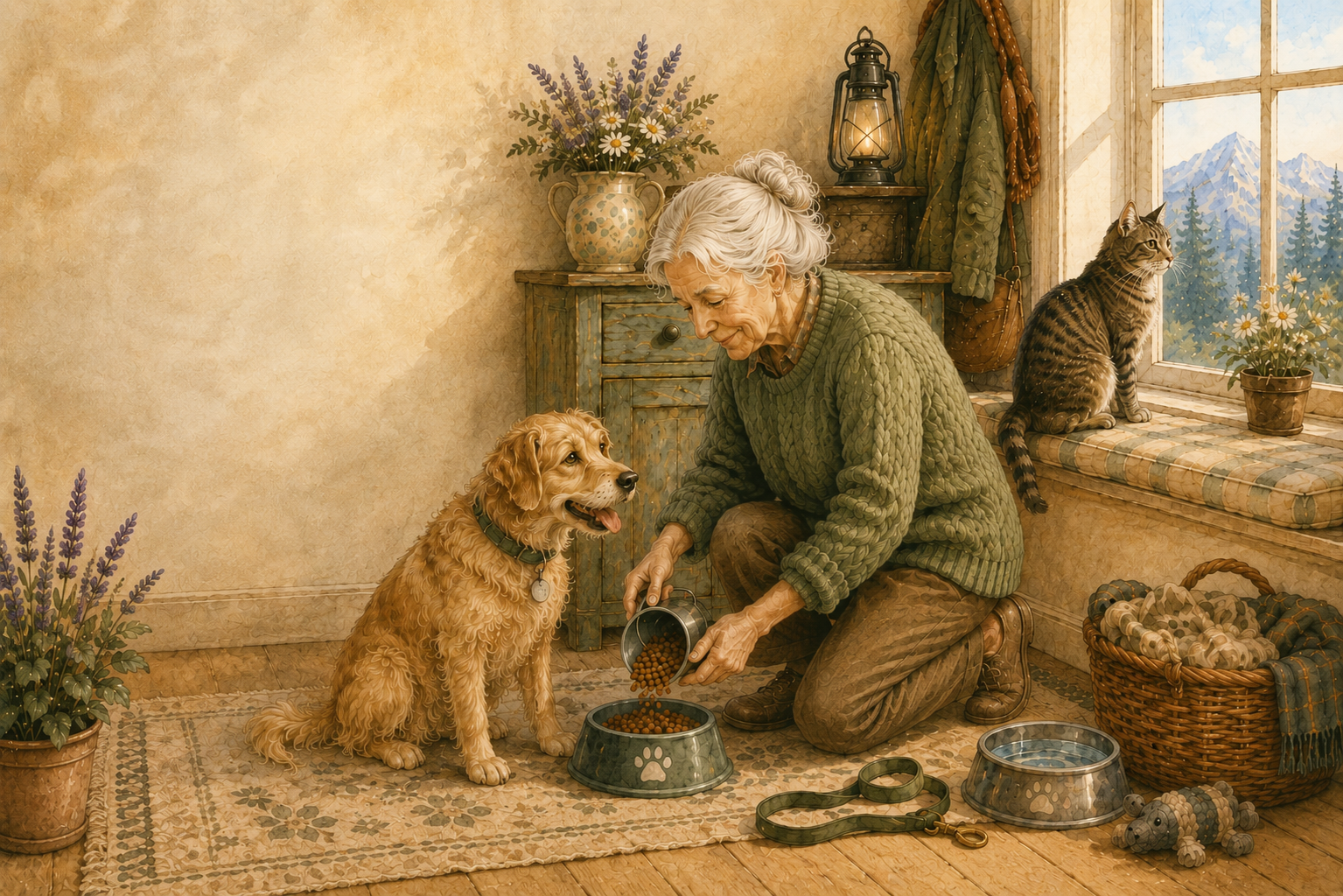
How Companionship and Purpose Support Wellbeing Later in Life
There are some needs that are easy to underestimate because they do not always announce themselves boldly.
Companionship is one of them.
It may look like a quiet conversation at the kitchen table. A walk around the block. A familiar paw beside a chair. A dog waiting near the door before breakfast. A cat settling into the same patch of sunlight every afternoon.
These ordinary moments may seem small and insignificant, but for many people and their pets, these moments are meaningful.
For many older adults, companionship can become part of the structure of a day. It can offer rhythm, presence, affection, movement, and a reason to keep going in life when the world has become more quiet than it once was.
The Benevolent Wolf’s first season is built around a simple question:
What unfolds when both people and animals are in need of connection?
That question is why this season begins with Pets for the Elderly, a nonprofit organization whose mission sits at a meaningful intersection: older adults seeking companionship, and shelter animals waiting for homes.
But before we can understand the importance of that mission, we have to understand the need it answers.
The Health Cost of Disconnection
Let’s take a factual look at social isolation and loneliness, two very critical issues that many people, especially aging adults face.
The Centers for Disease Control and Prevention describes social isolation as lacking relationships, contact, or support from others. Loneliness is the feeling of being alone, disconnected, or without meaningful closeness.
According to the CDC, about one in three adults in the United States report feeling lonely, and about one in four report not having social and emotional support. The CDC also connects social isolation and loneliness to increased risk for serious health concerns, including heart disease and stroke, type 2 diabetes, depression and anxiety, dementia, suicide and self-harm, and earlier death.
For older adults, the risk of social isolation and loneliness can become especially significant, increasing vulnerability to serious health issues such as cognitive decline, chronic illness, and reduced overall quality of life. The National Academies of Sciences, Engineering, and Medicine reports that approximately one-quarter of community-dwelling Americans age 65 and older are considered socially isolated, a risk heightened by life changes such as living alone, losing family or friends, chronic illness, sensory impairments, limited mobility, and reduced access to transportation or community resources.
In other words, loneliness and social isolation are not simply sad feelings or an acceptable stage at the edge of a life.
They can become a health concern.
A community concern.
A dignity concern.
And that means we must recognize the importance of connection for people—that it is not optional, but essential.
What Companionship Can Offer
Companionship does not erase every hardship.
A pet cannot replace family, medical care, financial stability, accessible transportation, affordable housing, or human community. It would be careless to pretend otherwise.
But for many people, a companion animal can become part of a wider circle of support.
A dog may encourage someone to step outside and see a neighbor.
A cat may make a quiet home feel less empty.
A feeding schedule may bring structure to the morning.
A familiar animal presence may soften grief, routine, or transition.
Companionship can offer affection, but it can also offer something more concrete: a daily relationship that asks to be tended.
This is significant.
Some research around pet ownership and loneliness is mixed, and that honesty is important. Pets are not a universal cure. They are not appropriate for every person or every season of life. Care needs, costs, housing, mobility, allergies, grief, and support systems all matter.
But the possibility remains meaningful.
For someone who wants a companion animal and can responsibly care for one, the relationship may bring social connection, emotional presence, routine, and purpose into the day.
That is not a small thing.
The Power of Being Needed
One of the quietest forms of purpose is knowing that someone is waiting for you.
A food bowl needs filling.
Fresh water needs setting out.
A leash needs its place to hang by the door.
Medication needs to be given.
A litter box needs cleaning.
A grateful pet needs someone to follow from room to room.
These are ordinary tasks, but ordinary tasks of care and responsibility can become anchors of purpose.
Research supports how important purpose is later in life. A JAMA Network Open cohort study of 6,985 adults over age 50 found that stronger life purpose was associated with lower all-cause mortality. The study described purpose in life as something that can stimulate goals, promote healthy behaviors, and give meaning to life.
This does not mean pet ownership is the only path to purpose. People find purpose through family, friendship, faith, volunteering, work, creativity, caregiving, community, learning, advocacy, and countless other forms of contribution. However, companion animals can offer one deeply accessible form of purpose: another living being who depends on daily care. For some older adults, that responsibility may support a sense of usefulness, continuity, and emotional connection. A pet does not simply say, “You are loved.” Sometimes a pet also says, in the plain language of daily life: “You are needed here.”
Routine as a Form of Care
Routine is easy to overlook until it is lost.
After retirement, loss, illness, relocation, or major life change, the structure of a day can shift dramatically. The familiar reasons to get up, leave the house, prepare meals, or move through time may become less predictable.
A companion animal can help rebuild rhythm.
Morning feeding.
A short walk.
A regular grooming routine.
Playtime.
Vet appointments.
Evening settling.
These acts can create a pattern, and patterns can help shape the day.
Pets for the Elderly shares the story of Donna and Bonnie, a senior adopter and an older dog who both needed a new chapter. Donna had lost her beloved dog and wanted an older companion dog. Bonnie, an older dog whose previous owner could no longer care for her, needed a home and steadier care.
When Bonnie came into Donna’s life, the relationship brought more than affection. It brought a schedule, fresh air, exercise, medicine, attention, and consistency.
That is the heart of this topic.
Companionship is emotional, yes.
But it is also practical.
It happens in the repeated acts of care that turn a house into a shared home.
Connection Goes Both Ways
One of the most important ideas guiding this first season of The Benevolent Wolf — which is focused on the intersection of aging, companionship, and shelter animal adoption — is that the benefit of companionship through pet adoption is not only experienced by humans.
Shelter animals are not passive symbols in this story. They are living beings with needs of their own.
They need safety.
They need trust.
They need routine.
They need care.
They need a place in the rhythm of a home.
This is why Pets for the Elderly’s mission is so powerful. The organization works to provide companionship to senior individuals through pet ownership while helping shelter animals find homes.
Older adults may need connection, purpose, and daily companionship.
Shelter animals may need safety, belonging, and someone willing to see their value.
One adoption can answer both needs.
Pets for the Elderly’s success story of James and Trinity captures this idea beautifully. Trinity, an eight-year-old Lab mix, had come from difficult conditions before arriving at Animal Friends in Pittsburgh. James was 92 when he adopted her. The shelter described Trinity as sweet and gentle, and noted that the two needed each other. That line carries the whole season...
They needed each other.
Where the Needs Meet
Pets for the Elderly began in 1992 and has grown into a national program supporting senior adopters through participating shelters. The organization helps pay adoption-related fees for people age 60 and older who adopt a companion dog or cat from a participating shelter.
Their mission does not only foster and celebrate companionship, it also helps remove one of the barriers that can stand in the way...the financial barrier.
Wanting a pet and being able to responsibly adopt one are not always the same thing. Adoption fees, veterinary care, food, grooming, transportation, housing restrictions, mobility limitations, and fixed incomes can all affect whether companionship feels possible.
This is where the conversation becomes more complicated, and more important.
It is easy to say, “Everyone should have a companion.”
It is harder, and more useful, to ask:
What makes companionship accessible?
What support systems help it last?
What keeps people and animals together after adoption?
What organizations are already doing that work quietly and well?
Pets for the Elderly offers one answer.
Not the only answer.
But a meaningful one.
Not a Cure-All, But a Meaningful Path
The Benevolent Wolf will never frame pet ownership as a simple fix for loneliness.
That would be too easy.
Aging is complex. Loneliness is complex. Animal care is complex. No single solution can carry the full weight of human need.
Some older adults may not want a pet.
Some may not be able to care for one safely.
Some may need human support first.
Some may live in housing that does not allow animals.
Some may be grieving a pet and not ready for another.
Some may need temporary help keeping the animal they already love.
All of that deserves respect.
But complexity should not make us dismiss the power of companionship.
For the right person, with the right support, a companion animal can become part of a healthier, more connected life.
A reason to open the door.
A reason to walk a little farther.
A reason to keep a schedule.
A reason to speak softly into the room.
A reason to begin again.
Carrying the Story Forward
The Benevolent Wolf’s Season One Spotlight is not only about Pets for the Elderly as an organization. It is about the need their mission helps us see.
We are exploring companionship, aging, shelter animals, barriers to pet ownership, and the quiet work of organizations that help connection become possible.
The first lesson is simple:
Companionship matters because connection is an essential part of wellbeing.
Routine matters because the shape of a day can affect the shape of a life.
Being needed matters because purpose can help people stay rooted.
And when a senior and a shelter animal find each other, the impact extends beyond what is immediately visible.
As Season One continues, we will follow this question more deeply:
If companionship can support wellbeing, what keeps it out of reach?
The next part of the trail turns toward the barriers — adoption fees, veterinary care, fixed incomes, housing, transportation, and the support systems that can help companionship last.
Because recognizing the value of connection is only the beginning.
The next question is how to make connections more accessible.
Sometimes purpose returns with a bowl to fill.
Sometimes hope arrives with a leash by the door.
Sometimes a life begins again because another life is waiting.
From the trail, 🐾
The Benevolent Wolf
